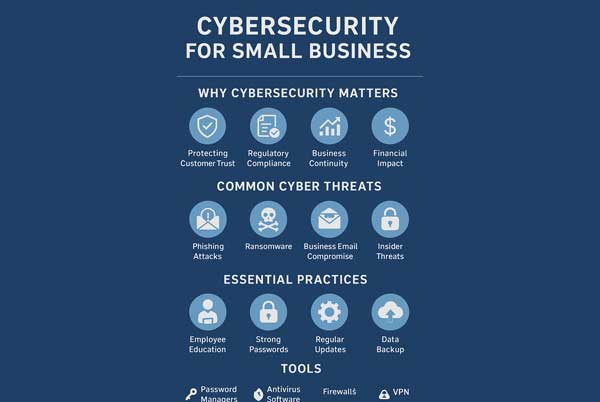
Cybersecurity for Small Business
In the digital age, small businesses enjoy access to powerful tools and platforms once reserved for large corporations. Cloud services, e-commerce platforms, social media, and digital payment systems enable small businesses to compete globally. However, this digital transformation comes with increased exposure to cyber threats. Cybersecurity is no longer an issue only for large enterprises; small businesses are equally at risk—sometimes even more so because attackers perceive them as easy targets.
This article explores why cybersecurity matters for small businesses, the risks they face, essential practices for protection, tools they can leverage, and future trends in small business cybersecurity.
Why Cybersecurity Matters for Small Businesses
Many small business owners assume cybercriminals target only large organizations with vast resources. In reality, small businesses often lack advanced security systems, making them attractive targets. According to industry studies, nearly half of cyberattacks target small to mid-sized businesses, and many of those attacked struggle to recover due to financial losses, reputational damage, and regulatory penalties.
Key reasons cybersecurity is crucial for small businesses include:
- Protecting Customer Trust: Customers expect their personal and financial data to be secure. A breach can permanently damage reputation.
- Regulatory Compliance: Laws such as GDPR, HIPAA, or PCI DSS apply to businesses of all sizes, requiring data protection.
- Business Continuity: Cyberattacks can disrupt operations, leading to downtime and lost revenue.
- Financial Impact: Small businesses are often less financially resilient, making recovery from breaches costly and difficult.
- Supply Chain Security: Small businesses are often entry points for attackers targeting larger organizations.
Common Cyber Threats Facing Small Businesses
- Phishing Attacks
Deceptive emails trick employees into revealing login credentials or clicking malicious links. - Ransomware
Malware encrypts data and demands payment for its release, often crippling small businesses. - Business Email Compromise (BEC)
Attackers impersonate executives or vendors to trick employees into transferring money or sensitive information. - Insider Threats
Disgruntled employees or careless staff can expose sensitive data, intentionally or accidentally. - Password Attacks
Weak or reused passwords make accounts vulnerable to brute-force or credential-stuffing attacks. - Data Breaches
Hackers steal sensitive customer or business data, leading to identity theft or fraud. - Denial-of-Service (DoS) Attacks
Attackers flood systems with traffic, making websites or services unavailable. - IoT Vulnerabilities
Internet-connected devices like cameras or smart sensors may have weak security, creating entry points for attackers.
Essential Cybersecurity Practices for Small Businesses
- Educate Employees
Human error is the leading cause of cyber incidents. Training employees to recognize phishing attempts, handle sensitive data properly, and follow safe online practices is critical.
- Strong Password Policies
Implement multi-factor authentication (MFA) and require unique, complex passwords that are regularly updated. Password managers can simplify this process.
- Regular Software Updates
Outdated software contains vulnerabilities. Enable automatic updates for operating systems, applications, and antivirus software.
- Secure Wi-Fi Networks
Ensure business Wi-Fi is encrypted, hidden, and password-protected. Create separate networks for guests and employees.
- Data Backup and Recovery
Regularly back up important data to secure, offsite locations or cloud services. Test recovery processes to ensure they work.
- Use Firewalls and Antivirus Protection
Firewalls filter incoming and outgoing traffic, while antivirus software detects and blocks malware.
- Limit Access Control
Grant employees access only to the data and systems necessary for their role. This minimizes exposure in case of breaches.
- Encrypt Sensitive Data
Encryption ensures stolen data cannot be read without proper keys, protecting sensitive customer or business information.
- Incident Response Plan
Prepare a clear plan for responding to cyber incidents, including communication, containment, and recovery procedures.
- Work with Professionals
Managed service providers (MSPs) and cybersecurity consultants can provide affordable expertise for small businesses.
Cybersecurity Tools for Small Businesses
- Password Managers (e.g., LastPass, 1Password) – Simplify secure password storage and management.
- Antivirus and Anti-Malware Software (e.g., Bitdefender, Norton) – Protect against malicious software.
- Firewalls – Hardware or software solutions that control traffic flow and block malicious access.
- VPNs (Virtual Private Networks) – Secure remote connections, especially for remote or hybrid teams.
- Email Security Solutions – Filter phishing attempts, spam, and malicious attachments.
- Endpoint Protection – Monitor laptops, desktops, and mobile devices for suspicious activity.
- Backup Solutions (e.g., Acronis, Backblaze) – Automate regular data backups with recovery options.
- SIEM Tools (Security Information and Event Management) – Centralize logging and threat detection.
Cost-Effective Cybersecurity Strategies
Small businesses often have limited budgets, but cybersecurity doesn’t have to break the bank. Practical, cost-effective strategies include:
- Prioritization: Focus on protecting the most critical assets such as customer data and financial records.
- Open-Source Tools: Leverage reliable open-source security tools where appropriate.
- Cloud Services: Use cloud platforms with built-in security features instead of maintaining costly infrastructure.
- Outsourcing: Hire managed security services to gain professional protection at a fraction of in-house costs.
- Insurance: Cyber liability insurance can provide financial protection against data breaches and lawsuits.
Real-World Consequences of Neglecting Cybersecurity
- A small retail shop in the U.S. was forced to shut down after a ransomware attack encrypted its entire point-of-sale system. Without backups, recovery costs were unaffordable.
- A local law firm suffered reputational damage when a phishing attack exposed sensitive client documents.
- A family-owned manufacturer lost a major contract after a breach in its system provided hackers with access to a larger client’s supply chain.
These examples demonstrate how cybersecurity is directly tied to business survival and credibility.
Future Trends in Small Business Cybersecurity
- AI-Driven Security
Artificial intelligence will help small businesses detect anomalies and stop attacks faster. - Zero Trust Architecture
A “never trust, always verify” approach will become more common, limiting access at every step. - Cloud Security
As more small businesses move to the cloud, cloud-native security solutions will dominate. - Cybersecurity-as-a-Service
Affordable, subscription-based services will give small businesses enterprise-level protection. - Focus on Ransomware Defense
Immutable backups, advanced detection tools, and anti-ransomware strategies will be critical. - Regulatory Pressure
Governments will continue to enforce stricter cybersecurity requirements for businesses of all sizes.
Conclusion
Cybersecurity is no longer a luxury reserved for large enterprises. Small businesses are prime targets for cybercriminals, and a single incident can cause devastating consequences. By adopting cybersecurity best practices, investing in affordable tools, and fostering a culture of security awareness, small businesses can significantly reduce their risks.
Ultimately, cybersecurity for small businesses is not just about technology—it is about protecting trust, ensuring business continuity, and enabling sustainable growth in a digital-first economy.