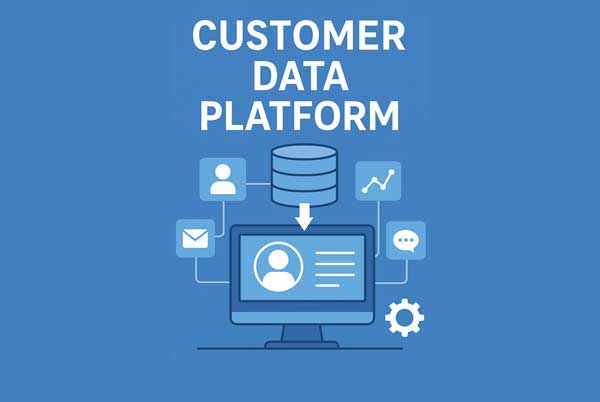
Customer Data Platform
In today’s digital economy, businesses face an overwhelming challenge: understanding their customers in a world where interactions take place across dozens of channels. From websites and mobile apps to emails, social media, and offline stores, customer activity leaves behind a massive trail of data. Yet, data alone does not create value—what matters is how organizations collect, unify, and activate that data to deliver meaningful experiences. This is where a Customer Data Platform (CDP) plays a transformative role.
A CDP is not simply another piece of marketing software, it is the backbone of modern customer engagement strategies. By unifying fragmented data into a single, persistent customer profile, CDPs allow businesses to better understand individuals, personalize interactions, and ultimately drive growth.
This article takes a deep dive into what a Customer Data Platform is, why it matters, how it differs from other tools, and the strategic ways organizations can leverage it to create customer-centric business models.
Defining a Customer Data Platform
At its core, a Customer Data Platform is a software system designed to collect and consolidate customer information from various online and offline sources. It creates a 360-degree view of each customer by integrating data that was previously siloed across marketing, sales, support, and product systems.
A CDP typically ingests:
- Demographic data: Names, emails, phone numbers, addresses.
- Behavioral data: Website visits, app usage, purchase history.
- Transactional data: Payments, order details, refunds.
- Engagement data: Email opens, clicks, social interactions.
What makes a CDP unique is its ability to not only unify this data but also make it accessible and actionable across multiple systems. Unlike older data warehouses or CRMs, a CDP is designed for real-time use, allowing marketers, sales teams, and product managers to deliver relevant experiences almost instantly.
Why Businesses Need a CDP
The need for CDPs has grown rapidly as consumer expectations evolve. Customers now demand personalized, seamless interactions across all touchpoints. They want brands to recognize them, anticipate their needs, and provide relevant offers without being intrusive.
Here are the primary reasons organizations turn to CDPs:
- Fragmented Data Landscape
Most companies operate with dozens of disconnected systems. A customer might first discover a brand through Instagram, then browse the website, sign up for a newsletter, visit a physical store, and finally make a purchase via a mobile app. Without a CDP, these interactions remain scattered across platforms, making it nearly impossible to connect the dots.
- Rising Demand for Personalization
Personalization has shifted from being a competitive advantage to a customer expectation. Generic emails and irrelevant ads no longer work. A CDP enables hyper-personalization by combining real-time behavioral data with historical context. For instance, instead of sending the same campaign to all subscribers, a retailer can tailor messages based on browsing patterns and purchase history.
- Privacy and Compliance Requirements
With regulations like GDPR and CCPA, companies must manage customer consent carefully. CDPs help centralize consent data, ensuring that communications and targeting strategies comply with regulations while still providing personalized experiences.
- Real-Time Customer Insights
A CDP enables businesses to react in real time. For example, if a customer abandons a shopping cart, the CDP can trigger an immediate personalized email or push notification with a discount to encourage checkout.
How CDPs Differ from Other Systems
A common question arises: Why not just use a CRM, data warehouse, or DMP (Data Management Platform)? The differences, though subtle at first glance, are crucial.
- CRM vs. CDP: A CRM focuses primarily on managing known customers and tracking direct interactions, usually for sales purposes. A CDP, on the other hand, consolidates data from multiple sources (both known and anonymous) and provides a holistic, real-time view.
- Data Warehouse vs. CDP: Data warehouses are powerful for storing and analyzing data but require technical expertise and are not built for real-time activation. A CDP is marketer-friendly and designed for immediate execution.
- DMP vs. CDP: Data Management Platforms often work with third-party, cookie-based data for advertising. CDPs rely mainly on first-party data, which is more reliable, durable, and privacy-compliant.
In essence, a CDP sits at the intersection of storage, management, and activation, providing both a technical and business solution
Key Features of a Customer Data Platform
The best CDPs offer several distinct features that make them indispensable:
- Data Integration – Ability to ingest structured and unstructured data from diverse sources.
- Identity Resolution – Matching data from different systems to create unified profiles (e.g., linking an email address to an in-store purchase).
- Segmentation – Grouping customers based on behavior, demographics, or predictive analytics.
- Real-Time Processing – Immediate updates that enable instant personalization.
- Accessibility – Democratizing data so that marketing, sales, and support teams can use insights without technical barriers.
- Activation – Connecting with downstream systems like email platforms, ad networks, and customer service tools to put insights into action.
Business Benefits of Implementing a CDP
Organizations that adopt a CDP gain a wide range of advantages:
- Improved Customer Experience: Unified data means customers don’t have to repeat themselves across channels. Support agents already know their history, and marketing campaigns feel consistent.
- Higher ROI on Marketing: By targeting the right audience at the right time, businesses reduce wasted ad spend and increase conversion rates.
- Enhanced Loyalty: Personalized experiences foster stronger relationships, leading to higher retention.
- Agility and Innovation: With data easily accessible, teams can experiment, test campaigns, and pivot strategies quickly.
- Data-Driven Culture: A CDP empowers non-technical teams to work with data, reducing reliance on IT departments and accelerating decision-making.
Use Cases of Customer Data Platforms
The applications of CDPs stretch across industries. Here are a few common scenarios:
- Retail: Deliver personalized product recommendations online and in-store.
- Travel and Hospitality: Create tailored travel offers based on past bookings and preferences.
- Financial Services: Provide timely alerts, relevant offers, and fraud detection by analyzing transaction patterns.
- Healthcare: Ensure patient engagement while maintaining privacy compliance.
- Media and Entertainment: Personalize content recommendations to increase engagement and subscriptions.
Challenges of Implementing a CDP
Despite their promise, CDPs are not magic bullets. Organizations must address certain challenges:
- Data Quality: Poor or inconsistent data undermines the effectiveness of a CDP.
- Integration Complexity: Connecting dozens of systems requires careful planning and technical resources.
- Cultural Resistance: Shifting to a data-driven approach can face internal pushback.
- Cost: Enterprise-grade CDPs can be expensive, making them harder to justify for smaller businesses.
- Misaligned Expectations: A CDP is a tool, not a strategy. Without clear goals, it risks becoming underutilized.
Steps to Successfully Implement a CDP
- Define Objectives – Clarify what the business aims to achieve, whether it’s personalization, compliance, or campaign optimization.
- Audit Current Systems – Map existing data sources and workflows to identify gaps.
- Ensure Data Quality – Clean and standardize data before integration.
- Choose the Right Vendor – Select a platform that aligns with industry needs, budget, and scale.
- Train Teams – Provide guidance to marketers, analysts, and customer support staff to maximize adoption.
- Start Small, Scale Gradually – Begin with a limited use case (such as abandoned cart campaigns) and expand over time.
The Future of Customer Data Platforms
Looking ahead, CDPs are expected to become even more sophisticated.
- AI and Machine Learning: Predictive analytics will enable proactive engagement, such as anticipating churn before it happens.
- Deeper Privacy Features: With growing data regulations, CDPs will play a bigger role in managing consent and ethical data usage.
- Integration with Emerging Channels: Voice assistants, connected cars, and augmented reality devices will add new touchpoints that CDPs must support.
- Industry-Specific Solutions: More vendors will develop vertical-focused CDPs tailored to sectors like healthcare or finance.
Ultimately, the CDP market will evolve from being primarily marketing-driven to becoming a company-wide data foundation.
Conclusion
A Customer Data Platform is no longer a luxury but a necessity in a customer-first world. By consolidating fragmented data, resolving identities, and enabling real-time personalization, a CDP empowers businesses to deliver experiences that meet rising expectations.
Yet, the true value of a CDP depends on strategy and execution. Companies must approach it not as a silver bullet but as a cornerstone of a broader data-driven transformation. With careful planning, commitment to data quality, and alignment across teams, organizations can unlock the full potential of CDPs—turning raw information into meaningful customer relationships.
In the end, businesses that succeed will be those that recognize data not as a byproduct but as the lifeblood of customer engagement. And at the heart of that ecosystem lies the Customer Data Platform.